राजकुमार सिद्धार्थ गौतमले २९ वर्षको उमेरमा जब आफ्नो राजदरवारिय सम्पूर्ण भौतिक सुख र मोह त्यागेर बौद्धिक मार्गमा लागेर ६ वर्षको अथक ज्ञान र ध्यान मार्गको प्रयासद्वारा बुद्धत्व प्राप्त गर्नु भयो ३५ वर्षको उमेरमा तब देखि उहाँलाई बुद्ध भनि चिन्न थालिएको हो विश्व मनुष्य संसारमा | बुद्धले बुद्ध शिक्षा मात्र दिनु भएको थियो आफ्नो शरीर तथा मनमा के कस्तो प्राकृतिक स्वाभाविक धर्म नियम रहेछ भन्ने चुरो कुरो जानेर बुझेर |
बुद्धले आफुले सिकाउनु भएको ज्ञान प्रज्ञा मार्गलाई कुनै नामकरण दिनु भएको थिएन | तर कालान्तरमा उहाँको मौलिक शिक्षालाई होच्याउने हेतु हिनयान भन्ने थालिएको पाइन्छ प्राचिन हिन्दुस्तानको इतिहास केलाउदा कोट्याउदा जब नागार्जुन ब्राह्मणले पहिलो शताब्दीमा महायान भन्ने बौद्ध मार्गको रचना गरे | त्यसैले कुनै बौद्धिक वैचारिक बहस गर्नु भन्दा अघि हामीहरुले चुरो कुरो जान्नु बुझ्नु पर्छ कहाँबाट कसरी किन कुनै मौलिक वस्तु, विचार, वाक्य वा वचन तोडियो मोडियो भनि | सोहि अनुसार हिनयान, महायान र बज्रयान ती थरिका बौद्ध मार्गहरु कसले, कहिले, कहाँ र किन उत्पादन गरी नामकरण गरे भन्ने चुरो कुरो नबुझ्नेले अनावश्यक बकबक गर्नु हुन्न तर्कको नाममा कुतर्क गर्दै एक चेतनशील विवेकशील प्राणी, मनुष्यको रुप स्वरुपमा जन्मेर|
बुद्धको मौलिक प्राकृतिक स्वाभाविक धर्म दर्शनलाई कसले, किन र कहिले देखि हिनयान भन्न थाल्यो भनि नबुझ्नेले अनावश्यक बकबक गर्दा रहेछ | महायानी र बज्रयानीहरुले थेरबादलाई हिनयान भन्ने गर्दा रहेछन भाई | त्यसैले उनीहरुको टाउकोमा मुङ्रो हाने झैँ बौद्धिक वैचारिक रुपमा हान्न हिनयान शब्द नियतपूर्वक प्रयोग गरेका हौ मानवताको लागि चेत खुल्लाकी भन्ने मनसाय स्वरूप बुद्ध दर्शन वा धर्मकाे वास्तविक सत्यलाई भ्रम र विभाजित मानसिकतामा पुर्याउने कुत्सित मनसायले विभिन्न यानहरुकाे प्रपञ्च रचिएको हाे भन्दा कुनै अत्युक्ति हुँदैन।
मुख्य चुरो कुरो के जान्नु बुझ्नु पर्यो बुद्ध धर्म दर्शनको मौलिकतालाई न हिनयान (तल्लो मार्ग) भन्थ्यो न त अन्य केहि उपनाम नै भन्ने गर्थ्यो तत्कालिन बुद्धकालमा | तपाईहरुले हिनयान भनेको नामकरण जब महायान पहिलो शताब्दीमा रचना गरे तत्कालिन समयको नागार्जुन नामक ब्राह्मण बुद्ध दर्शनको गुरुले तब उनले ब्राह्मणबाद र बुद्धबाद दुबैको मिश्रीत रुपमा आफुले निर्माण गरेको बुद्ध दर्शनलाई "महायान" (ठूलो मार्ग) भनिएको हो र बुद्धको मौलिक दर्शनलाई "हिनयान" भन्ने थालेको रहेछ भन्ने ऐतिहासिक तथ्य पाइन्छ प्राचिन हिन्दुस्तानमा |
त्यस्तै गरी बज्रायान नामक बुद्ध दर्शनको तेस्रो दर्शन कसले कहिले र किन उत्पादित गर्यो भन्ने समेत जान्नु बुझ्नु भएको छैन रहेछ भन्ने जान्न बुझ्न सकियो यहाँको अभिव्यक्तिबाट | 🙂🙃🙂 बज्रयानको उत्पति वा रचना चाही भोटमा भएको हो | त्यसैले भोटेहरुले मान्ने बुद्ध धर्मलाई बज्रयान भन्ने गर्छन | मेरो दिदि पनि करिब १५ वर्ष यो मार्गमा लागेको थियो आनी रुप धारण गरी जसले चुरो कुरो जाने बुझे आफु गलत तथा नक्कली बुद्ध दर्शन मार्गमा लागेका थिए भनि तब उनी विगत ३-४ वर्ष देखि बुद्धको मौलिक दर्शन खोज्ने मार्गमा लागेर विपश्यना (विशेष गरी जान्ने) मार्गमा लागे | बज्रयानको उत्पति कसरी भयो भोटमा भन्ने पनि जान्नु बुझ्नु पर्छ तामाङ्ग समुदायका मानिसहरुले जसले आफुलाई बुद्ध मार्गी हौ भन्दै बुद्धु मार्गमा लागेको पाइन्छ सुनेको आधारमा |
ऐतिहासिक तथ्य केलाउदा सातौ तथा नावौ शताब्दीमा भोटका ३ राजाहरु (क्रमश: सातौं शताब्दीका राजा श्रङचङ गम्पो, नावौ शताब्दीका दुई जना राजाहरु त्रिसोङ्ग देत्सेन र रल्पकान) लाई धर्म राजा मान्ने ठान्ने गर्थे | किन कि उनीहरुले भोटमा महायान बुद्ध दर्शन भित्राउन योगदान गरेको मानिन्छ | राजा श्रङचङ गम्पोको पालामा तत्कालिन भोटमा बोन धर्म (झाक्रीबाद) मान्ने प्रचलन भएकोले गर्दा निकै अशान्त थियो, अनावश्यक झैँझगडा गर्ने, निर्दोष प्राणीहरुको अनावश्यक बलि दिने प्रचलन व्यपाक रुपमा रहेको थियो भन्ने ऐतिहासिक तथ्य अनुसार जान्न बुझ्न सकिन्छ |
तर राजा श्रङचङ गम्पो आफ्नो दुई श्रीमतीहरु (नेपालको भृकुटी र चिनियाँ राजकुमारी) बुद्ध मार्गी भएकोले शान्त स्वभावको देखेर आफ्नो देशमा बुद्ध धर्म भित्राउने प्रयास स्वरूप हिन्दुस्तानबाट महायान बौद्ध धार्मिक गुरुहरुलाई बोलाई आफ्नो देशमा शान्ति स्थापना गर्ने हिँसात्मक मार्ग त्याग्ने प्रयासमा लाग्नु भएको थियो | तर भोटेहरुले निकै विरोध गरेकोले गर्दा उनले महायान बुद्ध धर्म दर्शनलाई सफलतापूर्वक स्थापना गर्न सफल हुनु भएन तर भित्राउन भने सफल हुनु भयो | त्यसैले उहाँ पछिको शक्तिशाली राजा त्रिसोङ्ग देत्सेनले पद्मसंभवलाई हिन्दुस्तान हालको पाकिस्तानमा जन्म भएका महायान बुद्ध दर्शन को ब्राह्मण गुरुलाई भोटमा निमन्त्रणा गरी बुद्धबाद र ब्राह्मणवाद मिश्रीत महायान बौद्ध धर्म र भोटको बोनबाद मिलाएर /मिसाएर बज्रयान बौद्ध धर्मको स्थापना गरेको पाइन्छ | त्यसैले महायान र बज्रयान दुवै बुद्धको मौलिक दर्शन शिक्षा होइनन् भन्ने स्पष्ट रुपमा जान्न बुझ्न सकिन्छ |
बुद्ध धर्म र आत्मा
बुद्ध धर्म दर्शनमा आत्माको अस्तित्व नै छैन | किन कि बुद्ध धर्म भनेको वस्तु र प्राकृतिक घटना परिघटनाको प्राकृतिक स्वाभाविक धर्म नियमसंग सम्बन्धित र आधारित रहेको पाइन्छ | विशेष जान्ने मार्गलाई पालि भाषामा "विपश्यना" भनिन्छ | जब विपश्यना सिकाउने सहि गुरु/शिक्षकको निर्देशन अनुसार विपश्यना ध्यान विधि सिक्दैनौ तबसम्म नजान्ने नबुझ्ने रहेछ बुद्धको ज्ञान भन्ने बोधात्मक अनुभूति सन् २०१५ मा जब स्वयं मैले शुरुवात गरे विपश्यना ध्यान गर्ने मार्ग १० दिन विपश्यना ध्यान शिविरमा गई तब भयो | कसैले लेखेको वा प्रवचन दिएको आधारमा मात्र जान्ने बुझ्ने कुरै होइन रहेछ बुद्ध धर्म दर्शनको शिक्षा भन्ने चुरो कुरोको बोध भयो |
बुद्ध धर्म/ दर्शनले आत्मा विश्वास गर्छ वा गर्दैन भन्ने समेत जानकारी नभएका व्यक्तिले निकै ठूलो अनावश्यक गफगाफ हाके जस्तो हो | मानिस मृत्यु भएपछि कहाँ के जान्छ भन्ने चुरो कुरो जान्नु बुझ्नु पर्छ | यस स्टाटस अरुले लेखेको पनि पढ्नु भयो भन्ने केहिहदसम्म चेतना जागृत हुन्छ | भौतिक शरीर मृत्युपछि कि जलाउछ कि गाड्छ | प्राण उडेर वायुमण्डलमा जान्छ | त्यसरी प्राण उड्दा "चित्त (मन)" ले पनि भौतिक शरीर छोडेर जान्छ जसले बास लिन्छ विभिन्न सुगति तथा दुर्गति देखिने तथा नदेखिने ३१ भूवन (लोक) मा आ-आफ्नो मन, वचन र शरीरले गरेको सत्कर्म वा कुकर्म अनुसार भन्ने मौलिक बुद्ध दर्शनको पालि भाषामा लेखेको त्रिपिटकमा उल्लेख छ |
"हिनायाना बाहेक माहायानी बज्रायानीहरुमा अनेकौं तर्क छन सायद एक जनमामा अध्यन गरेर सकिन्दैन होला अनि यो सहि हो यो गलत हो भन्नु सायद नमिल्लाकी" भनि तर्क गर्छ | मुख्य चुरो कुरो के जान्नु बुझ्नु पर्यो बुद्ध धर्म दर्शनको मौलिकतालाई न हिनयान (तल्लो मार्ग) भन्थ्यो न त अन्य केहि उपनाम नै भन्ने गर्थ्यो तत्कालिन बुद्धकालमा | हिनयान भनेको नामकरण जब महायान पहिलो शताब्दीमा रचना गरे तत्कालिन समयको नागार्जुन नामक ब्राह्मण बुद्ध दर्शनको गुरुले तब उनले ब्राह्मणबाद र बुद्धबाद दुबैको मिश्रीत रुपमा आफुले निर्माण गरेको बुद्ध दर्शनलाई "महायान" (ठूलो मार्ग) भनिएको हो र बुद्धको मौलिक दर्शनलाई "हिनयान" भन्ने थालेको रहेछ भन्ने ऐतिहासिक तथ्य पाइन्छ प्राचिन हिन्दुस्तानमा |
त्यस्तै गरी बज्रायान नामक बुद्ध दर्शनको तेस्रो दर्शन कसले कहिले र किन उत्पादित गर्यो भन्ने समेत जान्नु बुझ्नु भएको छैन रहेछ भन्ने जान्न बुझ्न सकियो यहाँको अभिव्यक्तिबाट | बज्रयानको उत्पति वा रचना चाही भोटमा भएको हो | त्यसैले भोटेहरुले मान्ने बुद्ध धर्मलाई बज्रयान भन्ने गर्छन | मेरो दिदि पनि करिब १५ वर्ष यो मार्गमा लागेको थियो आनी रुप धारण गरी जसले चुरो कुरो जाने बुझे आफु गलत तथा नक्कली बुद्ध दर्शन मार्गमा लागेका थिए भनि तब उनी विगत ३-४ वर्ष देखि बुद्धको मौलिक दर्शन खोज्ने मार्गमा लागेर विपश्यना (विशेष गरी जान्ने) मार्गमा लागे | बज्रयानको उत्पति कसरी भयो भोटमा भन्ने पनि जान्नु बुझ्नु पर्छ तामाङ्ग समुदायका मानिसहरुले जसले आफुलाई बुद्ध मार्गी हौ भन्दै बुद्धु मार्गमा लागेको पाइन्छ सुनेको आधारमा |
ऐतिहासिक तथ्य केलाउदा सातौ तथा नावौ शताब्दीमा भोटका ३ राजाहरु (क्रमश: सातौं शताब्दीका राजा श्रङचङ गम्पो, नावौ शताब्दीका दुई जना राजाहरु त्रिसोङ्ग देत्सेन र रल्पकान) लाई धर्म राजा मान्ने ठान्ने गर्थे | किन कि उनीहरुले भोटमा महायान बुद्ध दर्शन भित्राउन योगदान गरेको मानिन्छ | राजा श्रङचङ गम्पोको पालामा तत्कालिन भोटमा बोन धर्म (झाक्रीबाद) मान्ने प्रचलन भएकोले गर्दा निकै अशान्त थियो, अनावश्यक झैँझगडा गर्ने, निर्दोष प्राणीहरुको अनावश्यक बलि दिने प्रचलन व्यपाक रुपमा रहेको थियो भन्ने ऐतिहासिक तथ्य अनुसार जान्न बुझ्न सकिन्छ |
तर राजा श्रङचङ गम्पो आफ्नो दुई श्रीमतीहरु (नेपालको भृकुटी र चिनियाँ राजकुमारी) बुद्ध मार्गी भएकोले शान्त स्वभावको देखेर आफ्नो देशमा बुद्ध धर्म भित्राउने प्रयास स्वरूप हिन्दुस्तानबाट महायान बौद्ध धार्मिक गुरुहरुलाई बोलाई आफ्नो देशमा शान्ति स्थापना गर्ने हिँसात्मक मार्ग त्याग्ने प्रयासमा लाग्नु भएको थियो | तर भोटेहरुले निकै विरोध गरेकोले गर्दा उनले महायान बुद्ध धर्म दर्शनलाई सफलतापूर्वक स्थापना गर्न सफल हुनु भएन तर भित्राउन भने सफल हुनु भयो | त्यसैले उहाँ पछिको शक्तिशाली राजा त्रिसोङ्ग देत्सेनले पद्मसंभव
लाई हिन्दुस्तान हालको पाकिस्तानमा जन्म भएका महायान बुद्ध दर्शन को ब्राह्मण गुरुलाई भोटमा निमन्त्रणा गरी बुद्धबाद र ब्राह्मणवाद मिश्रीत महायान बौद्ध धर्म र भोटको बोनबाद मिलाएर /मिसाएर बज्रयान बौद्ध धर्मको स्थापना गरेको पाइन्छ | त्यसैले महायान र बज्रयान दुवै बुद्धको मौलिक दर्शन शिक्षा होइनन् भन्ने स्पष्ट रुपमा जान्न बुझ्न सकिन्छ |
अरुको मौलिक दर्शनलाई तोडेर मोडेर आफ्नो मौलिक दर्शन झैँ निर्माण गर्नु खोज्नु भनेको अरुको बौद्धिक चोरी गर्नु सरह हो | हुन् त प्राय नेपालीहरुलाई बौद्धिक चोरी भनेको के हो भन्ने अत्तोपत्तो पनि छैन | साथै २० औ शताब्दीसम्म बौद्धिक चोरीको रुपमा कुनै कुनै पनि व्यक्तिको लेख, आलेख र रचनात्मक कृतिहरुलाई हेर्ने दृष्टिकोण र उपकरणको विकास भएको थिएन | त्यसैले बौद्धिक चोरी नै भएको हो भन्ने कुनै आधार थिएन | तर अहिले आएर हेरेमा त देखिन्छ भेटिन्छ त्यस्तो | विभाजित वा खण्डित मानसिकताले जे पनि खण्ड खण्ड गर्ने र हेर्ने दृष्टिकोण विकास हुने रहेछ | त्यसैले कहिल्यै हतपत शान्त नहुने रहेछ विश्व मनुष्य संसारमा एक आपसमा झैँ झगडा, त ठूलो र म ठूलो, त जान्ने र म जान्ने, आदि बखेडा झिकेर गर्ने प्रवृति निकै हामि रहेछ विश्व मनुष्य संसारमा |
Friday, 17 March 2023


Monday, 28 March 2022
Inherited Beliefs, Questioning Mind: My Personal Journey Beyond Buddhism and the Concept of God.
Questioning the Faith I Inherited: My Journey Towards Independent Thought
Although I was born into the Tamang ethnic community of Nepal, which is culturally associated with Buddhism, I did not choose Buddhism as a matter of personal conviction. Like many people around the world, I inherited a religious identity through my family and the society into which I was born. In Nepal, a child born into a Hindu family is generally identified as Hindu, just as a child raised in a Buddhist, Christian, or Muslim family is often identified with that religion from birth. Yet, as I came to reflect more deeply on this reality, a fundamental question began to take shape in my mind: Do we genuinely choose our religious beliefs, or are they chosen for us before we are old enough to understand what belief means?
My personal view gradually developed that a child is not born with a conscious commitment to any religion. An infant does not arrive in the world believing in Buddha, God, Allah, or any other supernatural being. A child begins life without a consciously adopted theological doctrine. It is through family, culture, religious practices, and socialisation that children acquire the beliefs and identities of the communities in which they grow up.
I came to question whether it is fair to impose a particular theological belief system on a child before that child has developed the ability to understand, question, or make an independent choice about it. I began to see this as a serious ethical concern—not necessarily because parents intend to harm their children, but because they often pass on inherited beliefs without questioning them themselves. Many parents sincerely believe they are doing what is best for their children. Yet, in my view, good intentions alone do not resolve the question of whether children should be encouraged to accept religious doctrines without first being given the freedom to examine them critically.
I believe that every child deserves the opportunity to develop an independent mind, ask difficult questions, explore different perspectives, and eventually decide what to believe—or whether to believe in any religion at all. To me, this freedom of thought is fundamental to human dignity.
However, I did not arrive at these reflections through academic study or philosophical reading in my early years. My questioning began much closer to home.

Growing up Buddhist without understanding Buddhism
I, too, was identified as a Buddhist from birth. Yet, during my childhood, I had little understanding of what Buddha, Buddhism, or being a Buddhist actually meant. I inherited the identity, but I had not consciously examined its teachings or decided whether I accepted them.
By my adolescent years, I had begun to question the religious practices I observed within my own family. My mother would regularly engage in ritualistic worship and, from time to time, invite Buddhist religious leaders, known as Lamas, to perform religious ceremonies. During these rituals, the Lamas would recite selected religious scriptures and conduct the prescribed ceremonies. We were expected to show them respect, pay for their services, and offer them special food and drinks.
What troubled me was not simply the rituals themselves, but the questions they raised in my mind. Why did we need to perform these ceremonies so regularly? What purpose did they serve? What did the recitation of particular scriptures actually achieve? Were these practices necessary for leading an ethical and meaningful life? And what about families who could not afford to invite Lamas, pay for their services, or prepare the special food and drinks expected during such occasions? Were they somehow less deserving of spiritual blessings or a good life?
These questions stayed with me. I struggled to reconcile the resources devoted to religious ceremonies with the poverty and suffering I could see around me. I wanted to understand why these practices were considered necessary and whether their significance rested on reasoned understanding, inherited tradition, or faith alone.
My questions became even more intense when I observed certain animal-sacrifice rituals associated with religious observances in the wider society. In particular, I was disturbed by reports or instances of animal sacrifice around the celebration of Buddha Jayanti, the anniversary commemorating the birth of Siddhartha Gautama, the Buddha. The contrast troubled me deeply: how could practices involving the suffering or killing of animals be reconciled with the compassion and non-harming commonly associated with Buddhist teachings?
This contradiction was difficult for my adolescent mind to accept. I could not understand how a celebration honouring a teacher associated with compassion could coexist with rituals that appeared to me to contradict that very principle. Rather than accepting the practice simply because it was part of a religious or cultural tradition, I wanted to understand its meaning and justification.
Refusing to practise what I could not understand
As these questions accumulated, I made a personal decision: I would not participate in religious worship merely because it was expected of me. I did not want to visit temples or monasteries, worship deities, or place the red religious mark known as tika on my forehead simply to conform to social expectations. I wanted to understand the reasons behind religious practices before deciding whether to participate in them.
Another question repeatedly troubled me: if supernatural beings possess the power attributed to them by religious believers, why do so many poor, sick, and vulnerable people continue to suffer? Why are people who lack money, food, healthcare, and other basic necessities not protected from hardship? Why should people endure so much suffering when religious traditions often speak of divine compassion, protection, or blessings?
I was not claiming that I had discovered definitive answers to these questions. Rather, I had reached a point at which I could no longer accept religious explanations without examining them critically. I wanted to understand why people believed what they believed and whether the practices they followed genuinely helped those most in need.
My decision was not the result of hostility towards my family or a desire to provoke others. It emerged from my need to think independently and to make sense of the world around me. I could respect people who followed religious traditions without feeling obliged to adopt their beliefs or participate in their rituals.
For me, the distinction between respecting another person's freedom of belief and surrendering my own freedom of thought became increasingly important.
When others questioned my identity
My attitude towards religion gradually became noticeable to the people around me. In a society where religious identity is often expressed through visible practices and symbols, my refusal to participate in worship or wear a tika sometimes prompted questions about my beliefs.
Friends and acquaintances would ask whether I was an atheist or a Christian. At that time, I did not even fully understand what the word atheist meant. I would respond that I was not a Christian, but that I did not believe in religious worship or ritualistic practices.
Looking back, I find this experience significant. Other people seemed to assume that if I did not practise the religion into which I had been born, I must belong to another religion. It was difficult for them to imagine that someone might simply question religious beliefs, decline to follow rituals, and choose not to identify with another faith.
I was still developing the language to describe my own position. I had not arrived at it through a formal study of atheism, secularism, or philosophy. Instead, I had reached it through observation, questioning, and an unwillingness to accept something merely because it had been handed down to me.
What mattered most was not the label others might give me, but my freedom to examine beliefs for myself.
The beginning of a lifelong habit of questioning
My adolescent questioning of religious practices became part of a broader habit of examining things that others might accept without question. I began to recognise the importance of distinguishing between inherited assumptions and reasoned convictions, between social conformity and personal understanding, and between respecting tradition and accepting every aspect of it unquestioningly.
I also came to understand that my questions did not automatically make me an expert on religion, nor did my personal doubts prove that every religious practice lacked value. They simply meant that I needed reasons before accepting claims as true. I wanted beliefs and practices to withstand thoughtful examination rather than remain unquestioned merely because they were culturally familiar.
This disposition would later influence how I approached other aspects of life, including my professional experiences and my growing interest in the social structures that shape people's opportunities, choices, and freedoms.
My journey began with questions about rituals performed within my own family. It grew into a more fundamental inquiry about belief, authority, compassion, and human suffering. At its heart was a simple but enduring conviction: people should be free to think, question, and arrive at their own conclusions rather than being expected to accept inherited beliefs without understanding them.
I was born into a Buddhist cultural tradition, but I gradually realised that being born into a religion and consciously believing in its teachings are not the same thing. That distinction became an important part of my personal journey towards independent thought.
Empowering Women and Infants: My Journey in Making a Difference in Nepal's Health
Before embarking on my journey as a nurse in Australia, I had gained valuable experiential learning from grassroots women since 1996. This involved various roles and responsibilities in hospitals and development agencies, spanning clinical and community settings. As a result of my experiences, I decided to pursue a career in the public health field and applied for the Australian Development Scholarship in 2004, which I successfully secured.
Upon completing the Master of Public Health program at the University of New South Wales in March 2006, I returned to Nepal equipped with new analytical knowledge and a deep enthusiasm to make a difference in the development sector. I had focused my major project work during my master's program on the issues I was passionate about. Initially, I joined a private college as a lecturer for Bachelor of Public Health and Bachelor of Nursing students. However, I soon realized that I wasn't satisfied with my role and desired to have a direct impact on the lives of women and their families. I yearned for an opportunity to make a meaningful and selfless contribution aligned with my personal and professional interests.
One day, I came across the National Policy on Skilled Birth Attendants 2006, which emphasized the establishment of maternity hospitals and community-based "birthing centers" by mobilizing resources from the non-government and private sectors. These facilities were intended to serve as midwife-led training sites. Inspired by these statements, I took the initiative to form a group of 15 female health professionals and established the first nurse-led standalone birthing center, known as the Basic Maternity Service Centre, in 2007. Each of us contributed NPR 100,000 from our own pockets to make this endeavor possible.
After gaining nearly three years of firsthand experience in managing the center, I recognized the need to establish a professional association that could advocate for and engage with the Nepalese government to develop a midwifery workforce capable of providing leadership in midwifery. In 2010, I led a group of 11 nurses working in different institutions, representing both clinicians and educators, to establish the Midwifery Society of Nepal. Meanwhile, I also realized the need to enhance my leadership skills and explore gender power relations in sexual and reproductive health. In 2010, I applied for the Australian Leadership Award, strategically aligning it with my vision, mission, and objectives. I approached and requested Kiran Bajracharya, an academic associate professor at Tribhuvan University Institute of Medicine Maharajgunj Nursing Campus, to assume the role of President while assuring her two terms of three years each. I took on the role of Joint Secretary.
Before pursuing my doctorate program in Australia, I had the opportunity to secure funding from UNFPA and support the advocacy and lobbying activities for the initiation of a midwifery education program in Nepal. Subsequently, Nepal was awarded the global midwifery twinning project with the Royal College of Midwives (RCM) in the United Kingdom through the International Confederation of Midwives. In 2012, during my fieldwork in Nepal, I dedicated half of my time to research and the other half to advocating and lobbying with stakeholders to kickstart the midwifery education program.
Upon completing my doctorate program in April 2015 and returning from Australia, I engaged in relief work for the districts severely affected by the 2015 earthquake. During this time, I established temporary birthing shelters and continued my advocacy and lobbying efforts for midwifery. The Bachelor of Midwifery program was subsequently launched by Kathmandu University in 2016, followed by the National Academy of Medical Sciences in 2017, Karnali Academy of Health Sciences in 2018, and B.P. Koirala Institute of Health Sciences in 2021. Currently, there are 25 professional midwives in Nepal, a significant increase from none in 2010 when the association was established. In 2019, I assumed the role of President of the association.
From February 2016 to February 2020, I served as a board member of the Nepal Nursing Council, nominated by the Ministerial Council. The council serves as the regulatory body for both nursing and midwifery professionals, enabling me to work on the scope of midwifery practice, midwifery code of conduct, and the establishment of a national licensing examination for midwifery graduates.
Over the past 14 years, I have been dedicated to putting the government of Nepal's policy into practice, producing the critical human resource of midwives for safe motherhood. Empowering Nepalese girls and women has been my lifelong dream, starting from my involvement with the Women's Rehabilitation Centre (WOREC) in 1996. I believe that midwives, based on the global evidence spanning 300 years from Sweden to the United Kingdom, are the key professionals in the health sector who can bring about lasting change. Despite the challenges, I have been unwavering in my commitment to producing well-trained professional midwives in Nepal, and I believe this will significantly improve the lives of childbearing women and their infants, even beyond my lifetime.
Modern Nepal's ancient childbirth practice still exist: Manifestations of violence against women during childbirth
Yesterday (27 March 2022) early in the morning at 7:47 am my near and dear obstetrician and gynaecologist (OBGYN) friend who also happened to be a licensed advocate shared me this picture in my messenger. Seeing the picture I could not write anything to her for a while and then after awhile I replied her saying, Brave lady! In an animal world that's normal and natural physiological process but in the human society world people had fantasized childbirth." I could not stopped myself and trying to find out the authenticity of the picture that has been shared via Swasthyapati facebook page stating, "A woman giving birth on the way to Bajura district. Lack of healthcare, illiteracy, lack of road transport and inaction of the responsible bodies, such incidents are still repeated in Nepal today.
Photo: Prakash Singh- Bajura" 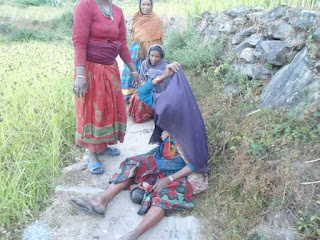 I wrote to the Swasthyapati in the messenger requesting to provide the contact of Mr. Prakash Singh who took the picture. But I could not stopped myself waiting to get the answer so I searched in the facebook to Mr. Prakash Singh then I came across his facebook page. Quickly first of all I went through is profile and came to realized that he is a journalist working for different media houses, for example, Editor-in-Chief at Badimalika Khabar, Reporter Nepal Television, Himal Khabar, and Himalyan Times. I dropped the message introducing myself and requesting his contact number.
In between my OBGYN friend replied to my comment questing, "Fantasized!?" I replied her saying, "Yes no doubt about it because of the over commeralization of childbirth." and I personally thanked her for sharing the picture then called her. Then we decided to meet at 11:00 AM. Once we met at at her workplace we discussed about the case secanario and explored about what we can do to stop similar incident to take place in the near future.
Besides, I wrote an email to the concerned authorty of the government of Nepal and stakeholders with the same subject of this post, "Modern Nepal's ancient childbirth practice still exist: Manifestations of violence against women during childbirth."
Dear respected duty-bearers and human rights advocates,
Namaste!
In modern Nepal ancient childbirth practices still exist but our policy makers and planners don't care about it since they love to preserve and protect ancient practices that prove from their action and/or inaction. This is manifestations of violence against women during childbirth.
Below picture from Karnali provice's Bajura district of a woman giving birth on the way depicted that because of lack of access to maternity care, illiteracy, low women status, lack of road transport and inaction of the duty bearers, inhuman practices and incidents are still exist in the modern Nepal despite we have good number of development agencies working for safe motherhood, road construction and education sectors but women in a rural and remote Nepal lives have not changed that much in the last 20-30 years sadly to say.
 According to the National Policy on Skilled Birth Attendant's Long Term Strategy Since 2010 we have been tirelessly advocating for the development and deployment of midwifery workforce especially for rural and remote Nepal in order to prevent this kind of incidents from happening in modern Nepal. But we have been facing problems from policy makers and planners even implementing the government of Nepal policy to put into practice so that our rural and remote poor women don't have to give birth like ancient time Nepalese women or animals in a very inhuman manner. Isn't this violation of human rights of women during childbirth? Violation of human rights in childbirth has to be stopped as early as possible by the government of Nepal as a duty brear.
Right holders, childbearing women's rights have been violated by the government of Nepal even in this 21st century modern Nepal despite it has been stated in the Constitution of Nepal to be ensured then how can we expect healthy mothers and healthy babies for the nation building process by improving maternal and newborn health in this country?
I strongly urge the government of Nepal and concerned stakeholders to support the government of Nepal to put into practice what has been ensured in the Right to Safe Motherhood and Reproductive Health Act 2018 so that our childbearing women and their newborn can be survived, thrived and transformed according the Global Strategy for Women’s, Children’s and Adolescents’ Health (2016–2030). We know that the SDG goal relating to safe motherhood won't be attained by 2030 but at least we can strive for it in the next 8 years.
Thank you and look forward to taking action proactively so that next time we don't have to read or hear any incident like this.
At 12 noon Mr. Prakash Singh has shared his contact number then I called him and decided to me him today at 11 AM since he leaving today for his work station in Karnali province.
As a responsible person and right holder it is my right to educate both duty bearers to fulfil their duty and to the right holders to educate and empower them to exercise their rights so that no women have to left behind like this rural and remote Bajura district childbearing women had to even in this 21st century. I felt that she has been treated like an animal by her family, society and state that's why she has to give birth in such a condition which we hardly can imagine and think in this 21st centruy era.


Monday, 10 May 2021
Reflection of my situation by then in 2013-2014: Whether suffering from Cognitive Dissonance or Macro Pituitary Adenoma
When I reflect my situation back in 2013-2014 while I was undertaking my doctorate program at the University of Sydney in the financial support of the Australian Government through Australian Leadership Award I was not sure whether I was suffering from Cognitive Dissonance or Macro Pituitary Adenoma (Benign tumor of brain) related mental health condition.
Upon my returned to Australia in November 2012 completing my field work (data collection) I thought that I might be suffering from Homesickness, which I never ever suffered before in 2004 while I been to Australia to undertake my Master in Public Health program or even in 2011 when I first been there to undertake my doctorate program.
However, upon my returned to Australia in November 2012 I did not understand what was going on inside me in my mind as I did not have any interest in my academic work. Instead I liked to focus on learning and exploring in-depth about the issues that I was undertaking as part of my doctorate program "Influence of gender power relation on sexual and reproductive health". I bought lot of books to learn and understand about human psychology, brain, behaviour, belief, attitude, mindset and so forth because though I understood the root cause of the gender based discrimination in the human society but thought that I might not able to do anything to change the status quo. Therefore, instead of focusing on my academic activities I kept reading books and literatures about those issues staying at home. Almost a year I spent my time in that way. Then my supervisor, Professor Dr. Kirsten Black, an academic gynaecologist at the University of Sydney, where she used to be the Joint Head of the Discipline of Obstetrics, Gynaecology, and Neonatology approached me asking how I been progressing with my study. Frankly, I told her that I am not progressing in my academic performance which I suppose to be. Then she asked me what has been happening to me I told her that I do not know what is happening but I do not like to focus on my academic work. She advised me to consult at the Psychological Counselling Centre of the university to seek counselling service which I did. Though I got some relief from the counselling that I received from the centre, however, still something was not going well. She asked me again how I have been progressing. I thought that I have to tell her my past health history so I told her, "before in 2005 I had 10 times higher than normal prolactin hormone and had suspected having prolactinoma and told me to do MRI but I have not done so far. Therefore, that could be the triggering factor why I like to remain alone and keep reading books rather than focus on my academic performance." After hearing my situation she helped me to consult with an Endocrinologist, Professor Mark S Cooper, Professor of Medicine and Head of Concord Clinical School of the University of Sydney and I have been diagnosed having Pituitary Macro Adenoma subtype Macro Prolactinoma (Benin Brain Tumor).
विश्व इतिहास पढौ, पाठ सिकौ मानवताको लागि अमेरिकी सहयोग कति घातक छ भनि बुझौ |
आज भन्दा ५७ वर्ष अघि सन् १९६३ जुन महिनामा भियतनामको ६६ वर्षीय बुद्ध धर्मको भिक्षु Thích Quảng Đức ले आफुलाई जलाएर देह त्याग गर्नुको पछाडी अमेरिकाको हात रहेको पाइन्छ त्यहाँको ऐतिहासिक तथ्य केलाउदा र कोट्याउदा |
भियतनामको बहुसंख्याक बुद्धमार्गी नागरिकहरुलाई अमेरिकी तथा पश्चिमा मुलुकहरुको सहयोगमा लादिएको ईसाई मार्गी विश्वासी बनेका भियतनामी अल्पसंख्याकहरुको नेताद्वारा नोटमा खरिदअर्को भोट प्राप्त गरेर राज्यसत्ता आफ्नो हातमा पार्न सफल भएपछि ईसाईबादी बाईबालबादी विश्वासबादी Ngo Dinh Diem प्रधान मन्त्री बनेपछि स्थानीय बहुसंख्यक बुद्धमार्गी करिब ७० देखि ९०% नागरिकहरुलाई न्याय अत्यचार विभेद गरेको प्रत्ति विश्वका ध्यान खिच्न उनले सार्वजनिक स्थलमा आफुलाई जलाएर आत्मदाह गरेका थिए |
सोहि वर्ष, १९६३ नोभेम्बर २ तारिखमा Ngo Dinh Diem को पनि भियतनामी आर्मीले हत्या गरेको थियो | सोहि वर्ष २२ तारिख नोभेम्बर महिनामा ३२ औ अमेरिकी राष्ट्रपति जोन एफ क्यानेडीको पनि हत्या गरेका थिए अमेरिकामा त्यहाँको गोप्य प्रशासक शासकहरुले |
किन कि जोन एफ क्यानेडी चाही विरोधी थिए भियतनाममा जे जति गर्दै आई रहेका थिए अमेरिकी गोपीय शासकहरुले |
निर्वाचनमा भोट भने त नोटबाट खरिद गर्न सकिने रहेछ भन्ने नेपालमै पनि नेपाल परिवार दलका ईसाईबादी बाईबलबादी एकनाथ ढकाल संसद तथा नेपाल सरकारको शान्ति तथा पुनःनिर्माण मन्त्रालयका भूतपूर्व मन्त्री भएबाटै जान्नु बुझ्नु पर्ने हो नेपालको नेपालीहरुलाई मायाप्रेम सद्भाव गर्ने सच्चा पक्का नेपाली नागरिकहरुले |
भियतनामको यस धार्मिक राजनीतिकबाट के जान्न बुझ्न सकिन्छ भने नेपालको इसाईबादी बाईबलबादीहरु प्रायले अमेरिकी सरकारले नेपालमा लाद्न खोजेको एमसीसीको पक्षधर हुन् सक्छ |
किन कि नेपाली ईसाईबादी बाईबलबादीहरुले वास्तवमा नेपालको नेपाली नागरिकहरुलाई मायाप्रेम गर्दैनन् रहेछ यदि ईसाईबादी बाईबलबादी छैनन् भने भन्ने तथ्य जान्न बुझ्न सकिन्छ |
त्यसैले उनीहरुले तपाई हामी जो ईसाईबादी बाईबलबादी छैनौ उनीहरुलाई सैतान, मुर्ख, बुद्धु, अज्ञानी भन्ने गर्दा रहेछन र ईसाईबादी बाइबलबादी होस् भनि तपाई हामीप्रति चाहना राख्ने रहेछन भन्ने मेरो पनि सन् १९९८ देखिको अनुभव रहेको छ |
पश्चिमा मुलुकका ईसाईबादी बाईबादीहरुलाई आफ्नो मान्छे ठान्ने अनि तपाई हामीहरुलाई आफ्नो नठान्ने मान्ने प्रवृति नेपाली ईसाईबादी बाईबादी विश्वासीहरुमा देख्न हेर्न बुझ्न जान्न सकिन्छ |
यहुदीको पुर्खालाई आफ्नो जन्मदाता प्रभू, परमेश्वर ठान्ने मान्ने नेपाली ईसाईबादी बाईबलबादी विश्वासबादीहरुलाई के भन्ने जसले तपाई हामी सबैलाई सैतान ठान्ने मान्ने गर्छन | विडम्वना !!
विश्व इतिहासमा भियतनामीहरुले मात्र अमेरिकाको शासक शोसक र सरकारलाई हराउन सफल भएको पाईन्छ |
Wednesday, 7 April 2021
सोचमै खोट भए पछि ब्याईतेलाई भन्दा ल्याईतेलाई बढि चासो हुने रहेछ अंशको
"महिलाले आमाबाबुको सम्पत्तिमा अंश पाउने, पतिकोमा पनि हक लाग्ने" शिर्षकको लेख शोभा शर्माद्वारा लिखित आज विहानै पढेसंगै महिलाहरु कति पिडित छन् आफ्नै धर्म संस्कार संस्कृतिद्वारा संचालित चलन प्रचलन प्रथा र परम्पराद्वारा भन्ने तथ्य बारेमा चिन्तन मनन भयो मनमस्तिष्कमा | किन कि यसको बारेमा मैले चाही आफुले सन् २०११ मा "यौन तथा प्रजनन स्वास्थ्यमा लैङ्गिक शक्तिको सम्बन्ध" शिर्षकमा विद्यावाराधि गर्ने क्रम नेपालको कानूनको ऐतिहासिक पाटो कोट्याउने अवसर प्राप्त भएको थियो | महिला र पुरुष दुवै जैविक लिङ्ग हुन् तर किन विभेद गर्ने गर्छन लिङ्गको आधारमा भन्ने जिज्ञासा मनमा लागेकै कारणले गर्दा हो मैले त्यस्तो शिर्षक छनोट गरेको एक स्वास्थ्यकर्मी भएको नाताले गर्दा | मेरो आफ्नो शोधपत्रको शिर्षकको बारेमा विभिन्न अनुसन्धात्मक कृतिहरु अध्ययन गर्नेक्रममा मुख्यत दुई प्रमुख अवधारणाहरु (पितृसत्तात्मक समाज र हिन्दु समाज) तेर्सियो लैङ्गिक विभेद हाम्रो देश र समाजमा विद्यमान हुनुको भन्ने बुझियो | सोहि क्रममा पितृसत्तात्मक समाजको बारेमा स्वविश्लेषण गर्दा चित्त बुझ्ने आफ्नो पिता पुर्खा बाजे बुबा दाई भाईहरुलाई आरोप प्रत्यारोप गर्न हामी महिला छोरी चेली दिदि बहिनीहरुलाई विभेद गर्छ भन्ने बारेमा | किन कि मैले कहिल्यै विभेदको अनुभूति गरिन आफ्नो बुबा र दाजु भाईहरुद्वारा | त्यसैले प्राकृतिक नीति सिद्धान्तमा चाही विभेद गर्छन वा गर्दैनन् रहेछ भनि पशुपंक्षीको संसारमा नियाल्दा कहिल्यै गोरुले गाईलाई, राँगाले भैसीलाई, बोकाले बांख्रीलाई, भालेले पोथी आदिले लिङ्गको आधारमा हेप्ने विभेद गर्ने एक आपसमा झैँझगडा विपरित लिङ्गसंग कहिल्यै गर्दैन भन्ने तथ्यमा स्पष्ट रुपमा बुझियो | तर गोरु गोरु, राँगा राँगा, बोका बोका, भाले भाले आदि पशुपंक्षीहरुको पुरुष पुरुष बीच चाही जुध्ने झैँ झगडा गर्ने पाइयो र भाले (पुरुष) पशु पंक्षीले पोथी (महिला) लाई सन्तान उत्पादन गर्न यौनकृयाको निम्ति मात्र खेद्ने गरेको पाए पश्च्यात पितृसत्तात्मक समाज भनि आरोप प्रत्यारोप लगाउनु बेकार छ भन्ने लाग्यो | साथै पितृसत्तात्मक समाज निर्माण गर्ने सोचको स्रोत अवश्य केहि त हुनु पर्छ भन्ने लागेसंगै दोस्रो अवधारणा हिन्दु समाज तर्फ सोच खोज गर्न तर्फ लागे संगै हिन्दुस्तानमा करिब १८५ देखि ७५ ईसा पूर्वमा लिखित रचित मनुस्मृति नामक ग्रन्थ/शास्त्रमा आएर ठोकियो मूल जड जरा हिन्दु समाज निर्माण हुनु र गर्नुको प्रमुख स्रोत | तत्पश्च्यत गहन, गहिरो र गम्भीर रुपमा मनुस्मृति पढ्ने मार्गमा लागियो अंग्रेजी र नेपाली भाषामा अनुबाद गरेको मौलिक संस्कृत भाषाबाट | मनुस्मृति पढेपछि मनमा जिज्ञासा लागेको थियो कसरी र कहिले हाम्रो देश र समाजमा भित्रियो मनुस्मृतिमा उल्लेखित सोचविचार सहितको प्रचलन भन्ने |
तर उक्त मेरो जिज्ञासा मेटियो जब भोटाहिटीमा मनुस्मृति किन्न भनि सन् २०१२ मा नेपाल आउँदा एक पुस्तक पसलमा गई मनुस्मृति किन्नको लागि माग गर्दा मेरो बोलि सुनेर मेरो नजिकैको ग्राहक मुसुक्क हाँसे अनि मैले उनलाई सोधे तपाई त मुसुक्क हाँस्नु भयो नि मैले मनुस्मृतिको नाम लिदा भने पछि उनले भने तपाईले जड जरानै कोट्याउने मार्गमा लाग्नु भएको रहेछ तपाईले "मानव न्याय शास्त्र" को बारेमा पनि अध्ययन गर्नुहोस् भनि सल्लाह सुझाव दिए | साथै उनले भने मानव न्याय शास्त्र हाम्रो देशको पहिलो लिखित कानून हो जसमा मनुस्मृति लगायत अन्य हिन्दु धार्मिक ग्रन्थहरुलाई स्रोत सामाग्रीको रुपमा लिएर लेखिएको छ जय स्थिति मल्लको पालामा | उनको परिचय माग्दा उनीले भनेका थिए मेरो नाम रमेश अधिकारी हो मेरो पेशा वकालत गर्नु हो भनि | उनको व्यक्तिगत आधिकारिताको बारेमा जाने बुझे पछि मानव न्याय शास्त्र खोज्ने मार्गमा लागे र अध्ययन पनि गरे तब छर्लङ्ग भए नेपालको कानून दैवले जानुन किन भनेका रहेछन र नेपाली समाजमा किन चकाली मात्रामा विभेद रहेछ लिङ्ग, वर्ण, वर्ग, जातजाति, संस्कृति, भाषा, धर्म, भूगोल आदिको आधारमा भनि |
आजभन्दा झन्डै साढे सात सय वर्षअघि, बिक्रम सम्वत १४३६ मा हिन्दुस्तानको पुत्र जो राजा भए र कहलिए तत्कालिन काठमाडौँ उपत्यकाको उनी हुन् जयस्थिति मल्ल जसले जारी गरेको कानुन भनेकै "मानव न्याय शास्त्र" हो जुन मनुस्मृति लगायत अन्य हिन्दुस्तानको धार्मिक सांस्कृतिक ग्रन्थहरुमा आधारमा लेखिएका थिए हिन्दुस्तानी ५ ब्राह्मणहरुको सहयोगमा भन्ने ऐतिहासिक तथ्य रहेको छ |
जय स्थिति मल्लको पालामा निर्माण गरेको कानूनलाई उच्च स्तरको कानून भनि पृथ्वी नारायण शाहले भनेको पाइन्छ दिव्य उपदेशमा |
नाम भने मानव न्याय शास्त्र तर कति अमानवीय अन्यायकारी शास्त्र थियो मानव न्याय शास्त्र भन्ने तथ्य जो कोहिले गहन, गहिरो र गम्भीर रुपमा विश्लेषण गरेस स्वत जान्न बुझ्न सकिन्छ |
त्यस्तो अतिनै जातिबादी लैङ्गिकबादी वर्णवादी कानूनमा आधारित भई जङ्ग बहादुर राणाको पालामा राजगुरु पण्डित पुरोहित पुजारीहरुद्वारा लेखेर जारी गरेको कानून नै मुलुक ऐन हो भन्ने तथ्य स्पष्ट छ जुन त्यस्तै छ जस्तो मानव न्याय शास्त्रमा उल्लेखित गरेका छन् | त्यसैले त नेपालको पारिवारिक कानून नै प्राचीन हिन्दुस्तानको सामाजिक कानूनको रुपमा लिने, मनुस्मृतिमा आधारित छ भन्ने तथ्य स्पष्ट रहेको पाइन्छ नेपालको पारिवारिक कानूनी व्यवस्थाको बारेमा विधावाराधि गर्नु भएका माननीय न्यायधिस डा. सुलाहुद्धीन अख्तर सिद्धिकि ज्युद्वारा लिखित पुस्तक "मनुस्मृतिको पारिवारिक व्यवस्था र नेपालमा पारिवारिक विवाद" शिर्षक अध्ययन गरेमा |
तब छोराछोरीले समान रुपमा अंश पाउनु पर्छ भनि कुनै पनि हिन्दु नारीहरुले नसोचे नखोजे हुने रहेछ भन्ने तथ्य यी यस्तै ऐतिहासिक तथ्यहरुबाट स्पष्ट हुन्छ |
जब परिवारमै आफ्नो आमा बुबा दाजु भाईहरुले नै आफ्नो छोरीचेलीहरुलाई अंश दिन मान्दैनन र दिदैनन् तब त्यहिबाट जान्नु बुझ्नु पर्छ कस्तो सोचविचार, दृष्टिकोण र धारणाबाट हिन्दु समाज संचालित र निर्देशित छ भनि |
हाम्रो त बुबाले आमालाई भनेका थिए मेरो लागि छोराछोरी बराबरी हो | त्यसैले मैले जे जति कमाएको छु त्यो सबै ५ सन्तानहरुलाई बराबरी बाड्नु पर्छ भनि र सोहि गर्नु भयो आमाले जब बुबा ५२ वर्षको उमेरमा यस संसारबाट देह त्याग गर्नु भयो खुट्टाको हड्डीको क्यान्सरको कारणले गर्दा |
त्यसैले आमा बुबाको हात महत्वपूर्ण हुन्छ छोराछोरीहरुलाई समान व्यवहार गर्नु न कि सरकारी कानून भन्ने तथ्य मेरै आफ्नै घरपरिवारबाट पुष्टि भएको छ | हाम्रो ३ जना माईतिहरुले त्यसको लागि कहिल्यै विवाद र विरोध गरेनन् |
बरु उल्टै बुहारी जो अतिनै हिन्दु संस्कार संस्कृतिबाट हुर्के बढे पढेका थिए हिन्दुस्तानमा उनले पो मेरो ससुराको धन भन्दै हाम्रो बुबाको धन प्रति आँखा गाडेको पाइयो |
हाम्रो बुबाको सम्पतिप्रति आईते र ल्याईते (बुहारी) को बढि चासो भएको पाइयो ब्याईते (छोरा) हरुको भन्दा पनि तब त्यस्ताहरुलाई कसरी ठेगान लगाउनु पर्छ मैले पनि आमासंग मज्जाले जाने बुझे सिकेकै कारणले गर्दा सोहि अनुसार व्यवहार पनि गर्दै आई रहेको छु |
स्रोत सामाग्री
१. शोभा शर्मा, २०७७ चैत्र २४ "महिलाले आमाबाबुको सम्पत्तिमा अंश पाउने, पतिकोमा पनि हक लाग्ने" पूर्ण लेखको पहुँच https://www.setopati.com/politics/233755
Tuesday, 16 March 2021
भोटे शब्दको रुपक (metaphorical) संज्ञात्मक नै खतरा: मानवशास्त्रीय तथा समाजशास्त्रीय दृष्टिकोणद्वारा विश्लेषण
चिम्सो आँखा थेप्चो नाक हुने भोटेहरुको जे पनि खतरा नै हुने रहेछ तथ्यगत विश्लेषण गर्दा |
लहै विचारविमर्श गर्नुहोस्, जान्नुहोस बुझ्नुहोस् सबै परिवर्तन गर्नुहोस् श्रीमती र आफ्नो सन्तान बाहेक भनि सल्लाह सुझाव दिएको चिम्सो आँखा थेप्चो नाक भएको कोरियन धनाढ्य व्यापारी भोटे, ली कुन्-हे ले जो स्यामसुङ्ग कम्पनीको अध्यक्ष पनि थिए अहिले चाही यस धर्तिबाट विदा भई सकेका रहेछन गतसाल नै |
नेपाली खस आर्य र नेवारहरुले नेपालमा त्यस्तै भोटेको रुपक (metaphorical) संज्ञात्मक रुपमा गुणगान गाएका होइनन् रहेछ निम्नानुसार |
- भोटे ताल्चा बलियो ताल्चा,
- भोटे (भालु) कुकुर ठुलो डरलाग्दो रिसाह प्रवृतिको तर नभुकी टोक्ने,
- भोटेको बच्चा स्वस्थ बलियो रातो पुक्क परेको गाला,
- भोटे ग्लास ठुलो ग्लास,
- भोटे नुहुवाई-धेरै समय लगाएर भित्रि बाहिरी शुद्ध सफा हुने गरी मिची मिची फोहोर मैला फ्याक्ने,
- भोटे कोशी-भोट (तिब्बत) मा मुहान भएको नदि भोटे कोशी र भोटेकोशी गाउँपालिका सिन्धुपाल्चोक जिल्लाको पनि खतरा नै मान्दा ठान्दा रहेछन |
ब्रह्म पुत्र नदि पनि भोटमै रहेछ मुहान |
निश्चित रुपमा ब्रह्म ज्ञान पनि भोटेबाटै प्राप्त भएको हुनु पर्छ भन्नेमा कुनै शंका उपशंका छैन |
तर तथ्य गहन, गहिरो र गम्भीर रुपमा सोच खोज् गर्नु पर्ने हुन्छ मौखिक कथ्य जुन लिप्पीबद्ध गरेको पाइन्छ साहित्यक रुपमा सोलाई सहि सत्य र यथार्थ रुपमा पुष्टि गर्न जसरी उल्लेखित तथ्यगत नेपाली समाजको समसामयिक विषयवस्तुहरुको घटना परिघटना, बोलि वचन र व्यवहारहरुको विचारविमर्श विवेचना र विश्लेषण र संश्लेषणद्वारा पुष्टि हुन्छ भोटेको रुपक (Metaphorical) अर्थ के हो भनि नेपाली समाजमा |
गोरा जातिहरुले चाही श्रीमती कति चाडै र धेरै फेर्ने गर्छन |
नपत्याए हेर्नुहोस् त पश्चिमा मुलुकहरुमा पारिवारिक सामाजिक बनोटको संरचना कस्तो पाउनु हुन्छ | बच्चाहरु पनि धर्म पुत्र र धर्म पुत्रीको नाममा लिने प्रचलन छ आफ्नो सन्तान हुँदा हुँदै त्यसरी धर्म पुत्र, धर्म पुत्री बनाउनुको अर्थ के हो?
तर भोटेहरुले हतपत श्रीमती फेर्ने गर्दैनन् रहेछ भनि उनीहरुको विगतदेखि वर्तमानलाई गहन, गहिरो र गम्भीर रुपमा सोध खोज गरेमा स्पष्ट हुन्छ | त्यसैले भोटेहरुको ३-४ जना दाजुभाईको एक श्रीमती हुने प्रचलन, प्रथा र परम्परा स्थापना गरेका होइनन् जुन हिन्दुस्तानी पाँच पाण्डव दाजुभाईले पनि सिको गर्दा उनीहरुको राज्यसत्ता नै स्वाहा भयो |
अरुको नक्कल के गर्ने नगर्ने होस् पनि जान्नु बुझ्नु पर्छ है गहन, गहिरो र गम्भीर रुपमा मानवशास्त्रीय र समाजशास्त्रीय गहन, गहिरो र गम्भीर रुपमा सोच खोज गर्दै विश्लेषण र संश्लेषण गर्नु पर्छ देश, काल र परिस्थिति अनुसार चलन सिक्नु जान्नु बुझ्नु पर्छ तब पो सफल भइन्छ जीवन र जगतमा मानवताको लागि | 😁😁😁
Monday, 15 March 2021
Social science theory are not universally applicable as asserted by Mao Zedong
In my understanding based on my own analysis theory of Marx, Engles, Lenin and Stalin are perfectly applicable only to those time, place and context when (19th and 20th centuries) and where (Europe) it was coined since it was NOT the natural science (physics, chemistry and biology) related theories.
Their theories were social science related theories that changes over the time and human brain development and advancement as according to the natural science (evolution, revolution and devolution).
Whatever Mao Zedong asserted and claimed was perfectly alright because he was 20th century great community leader of China.
We are in 21st century where due to natural science advancement even social science has also been moving forward rather than remain in the status quo like people mindset remain as it is because of the dogmatic sociopolitical theological related theories.
In Nepal and India we have layers of discrimination based on colour, class, caste, creed, and cult as well as biological sex and social construction of sex called Gender. However, in the western world and China, people have not faced and experienced discrimination like we do in India and Nepal. This is the reason WHY western world theories of Marx, Engles, Lenin and Stalin are not applicable all in one. However, it is applicable partly.
I love learning all types of theories but social science related theories I don't find useful in our day to day life because it is not applicable in changing time, place and social context.
However, as asserted and claimed by Mao Zedong, a Chinese communist revolutionary who was the founder of the People's Republic of China, which he ruled as the chairman of the Chinese Communist Party from its establishment in 1949 it is not complete true but definitely it is partially true. He said, "The theory of Marx, Engels, Lenin and Stalin is universally applicable. We should regard it not as a dogma, but as a guide to action. Studying it is not merely a matter of learning terms and phrases but of learning Marxism-Leninism as the science of revolution. It is not just a matter of understanding the general laws derived by Marx, Engels, Lenin and Stalin from their extensive study of real life and revolutionary experience, but of studying their standpoint and method in examining and solving problems." (Source: "The Role of the Chinese Communist Party in the National War" (October 1938), Selected Works, Vol. II, pp. 208-09)
I find fascinating to learn and explore how people think and understand different issues from their own perception, level of consciousness, understanding and information and knowledge that they hold inside their brain.
Most of the people talk about science without truly knowing what is science.
Usually Nepalese people think science is physics, chemistry and biology subjects. However, to learn and understand science first of all conscience is utmost important. If individual doesn't have conscience in their head it would be wise NOT to talk about science suffering from own sensory organs created illusion and delusion to spread rumors, myths and false information believing and clinging on fictional literature related knowledge and information.
Even well educated professionals think that theories are science.
In fact, NOT theories are scientifically true and universal only those that are based on natural science.
Social theories such as Marxism, Leninism, Feminism, and so forth can't be considered universal. But dogmatic people who can't think differently other than their loved dogma (ideological belief) whether that be theological dogma or sociopolitical dogma think and believe that whatever applicable in one time, place and social context is equally applicable in another time, place and social context. This is false belief and understanding of those people who can't think beyond their ideological dogma that has been swallowed without digestion thus love to be nauseated among others as well.
One of the facebookers in my above status pointed out quoting from the statement of Mao Zedong "but guide to action".
In response to him stating, "All socio-political-economic ideological belief that are considered social science theory/ies are no doubt is a Dogma whether its followers think and believe it is guide to action or not.
Have a look in Nepal or even elsewhere hardly anyone want to change their way of thinking from different thoughts, ideas, ideological belief, theories, or else. Everyone thinks my way is highway and others are shit. This proves how dogmatic people are who cling on one set of principles or theory rather than strive to be a pragmatic adopting each and every bit of good from different thoughts, ideas, ideological belief or theories."Monday, 8 March 2021
Beef eating is the oldest tradition of ancient India: Available textual evidence suggests
In Nepal, mainly Tamang community and as per Hindu belief system so-called untouchable caste group Sarki (type of Dalit people) people have been eating beef even as of now but priestly caste group Hindu people who make policy of the country and society think and believe Hindu never ever has eaten beef which is completely wrong perception that they have been holding in their mind if we dig out the history all the misconception related to their false belief will be cleared out. However, they don't do so so keep criticizing Tamang people thinking they are lower caste just because they eat their mother "cow" meeting. To learn and understand about colour, class, caste, creed and cult based discrimination in Nepal I have been exploring ancient Hindu texts and scriptures written by different Indian scholars and it has proven that in ancient India Brahmin who consider self while skinned colour pure and superior human beings used to eat beef. For example, Mr. Jeevan Paudel in the ARN facebook Group dated 8 March 2021 posted below status that clearly illustrate how beef lovers were ancient Indian Brahmin.
"Manusmriti (Chapter 5 / Verse 30) says, “It is not sinful to eat meat of eatable animals, for Brahma has created both the eaters and the eatables.”
Maharishi Yagyavalkya says in Shatpath Brahmin (3/1/2/21) that, “I eat beef because it is very soft and delicious.”
Apastamb Grihsutram (1/3/10) says, “The cow should be slaughtered on the arrival of a guest, on the occasion of ‘Shraddha’ of ancestors and on the occasion of a marriage.”
Rigveda (10/85/13) declares, “On the occasion of a girl’s marriage oxen and cows are slaughtered.” Rigveda (6/17/1) states that “Indra used to eat the meat of cow, calf, horse and buffalo.”
Vashistha Dharmasutra (11/34) writes, “If a Brahmin refuses to eat the meat offered to him on the occasion of ‘Shraddha’ or worship, he goes to hell.” Hinduism’s greatest propagator (The Complete Works of Swami Vivekanand, vol.3, p. 536).
Adi Shankaracharya’ commentary on Brihdaranyakopanishad 6/4/18 says : ‘Odan’ (rice) mixed with meat is called ‘Mansodan’. On being asked whose meat it should be, he answers ‘Uksha’. ‘Uksha’ is used for an ox, which is capable to produce semen.
The book ‘The History and Culture of the Indian People’, published by Bhartiya Vidya Bhawan, Bombay and edited by renowned historian R.C.Majumdar (Vol.2, page 578) says: “This is said in the Mahabharat that King Rantidev used to kill two thousand other animals in addition to two thousand cows daily in order to give their meat in charity”.
Eating the meat of cow is not a sin in hinduism🤣🤣 "
Friday, 15 May 2020
नेपालको जल र जमिन हिन्दुस्तानी सप्त ऋषिमुनिका सन्तानहरु मिलेर बिक्रि गरेको तथ्य प्रमाणहरु
नेपाली कांग्रेसका ३ कोइराला दाजु भाई प्रधान मन्त्री हुने प्रलोभनमा नेपालको ३ प्रमुख नदिहरु कोशी, गण्डकी र टनकपुर स्वाहा आफ्नो पिता पुर्खाको शासक, शोसक र सरकार हिन्दुस्तानलाई |
त्यस्तै गरी एमालेको अगुवाइमा महाकाली सन्धि प्याकेज ल्याई अन्य सम्पूर्ण रजनीतिक दलका शिर्ष नेताहरु मिलेर महाकाली सन्धि गरी लिपुलेक, लिम्पियाधुरा र कालापानी स्वाहा आफ्नो पिता पुर्खाको शासक, शोसक र सरकार हिन्दुस्तानलाई |
नेपाली नागरिकहरु ट्वा परे बारम्बार नेपाली कांग्रेस, एमाले र माओवादीका नेताहरु किन आफ्नो पुर्खौली पिता पुर्खाको थातथलो, हिन्दुस्तानको शासक, शोसक र सरकार भेट्न जाने गर्छन भनि |
तत्कालिन समयमा एमालेबाट छुट्टिएर नेकपा मालेमा हुँदा सो राजनीतिक दलका योगेश भट्टराई, घनश्याम भुषाल, नारायण ढकाल लगायतले ५५ सालमा "राष्ट्रघाती विसर्जनवादी एमाले नेतृत्व गुटका ५१ अपराध" नामक पुस्तकमा लेखेका बारेमा अहिले त्यस पुस्तकका दुवै लेखेकहरु मन्त्री भएका छन् उनीहरुले के ठान्दा मान्दा हुन् अहिले आफुले लेखेका पुस्तकको यी यस्ता निम्न तथ्यहरुको बारेमा [१]:
- महाकलीसन्धि दुवै सदनबाट पारित गराउन देउवा सरकारसँग सांसद खरीद गर्छु भनी खड्ग ओलीले ५ करोड रुपैयाँ माग गर्नेजस्ता घृणित कार्य गरे । महाकाली सन्धि दुवै सदनबाट पारित गराउनका लागि २०५३ भदौ ३ मा भारतीय राजदूतका शरणमा सांसद र केन्द्रीय सदस्यलाई केपी र माधवले भोज खुवाउन लगे ।
- टनकपुरको राष्ट्रघातलाई वैधानिक मान्यता दिने ‘महाकाली प्याकेज’को अवधारणा ल्याई राष्ट्रियताजस्तो संवेदनशील विषयसँग भारतीयहरूको वचनको पक्का देखिन १ खरब २० अरव वर्सेनि आम्दानी हुने सेटेलाइटबाट विदेशीलाई बिजुली बेच्नेजस्ता हावादारी कुराबाट जनता र कार्यकर्तालाई झुक्काउन खोज्दै नेपाललाई अहित हुने राष्ट्रघाती महाकाली सन्धि अनुमोदन गरियो ।"
के उनीहरुले सार्वजनिक रुपमा भन्ने सक्छ ती सबै हामीले लेखेका मिथ्या, गलत र झुट थियो भनि ?
स्रोत सामाग्रीहरु
१. नेपाल आज २०७३. एमालेले कतिसम्म राष्ट्रघात गरेको छ, योगेश भट्टराई र घनश्याम भुषालले लेखेको यी २४ बुँदा पढौं, पूर्ण पाठ यस लिंकमा अध्ययन गर्नुहोस् http://nepalaaja.com/2016/12/43799
२. एभरेष्ट नेपाल टेलिभिजन २०७७. प्रमाण सहित बालकृष्ण मिडियामा, राष्ट्र गीत मै प्रश्न , सत्ताको लागि देश बुझाए, अन्तर्वार्ता पुरा यस लिंकबाट सुन्नुहोस् https://www.youtube.com/watch?v=CbyLpKkaGyQ&feature=share&fbclid=IwAR2x5EOiOWZ4fNtSdmBZsJR0BlkEq7TD6C1rzxT7RxKEyVphySDz9TvW7RI
Wednesday, 29 April 2020
नेपालको कम्युनिष्ट कमाउ न नि अझै भने अतिनै कम निष्ठवान कुवाको कम्युनिष्टको पैतला राख्न पनि नमिल्ने
कोभिड-१९ महामारीको बेला क्युबाको चिकित्सकहरुले विश्वभर नै सहयोग गर्दै आई रहेको छ भन्ने विभिन्न पश्चिमा मुलुकहरुको साथै हाम्रै देशको पनि संचार मध्यमहरुबाट प्रचारप्रसार हुँदै आई रहेको छ जब कोभिड-१९ ले पश्चिमा मुलुकहरुमा तिब्र रुपमा फैलिन थाल्यो | सर्वप्रथम इटालीमा क्युबेली चिकित्सकहरु सहयोग गर्न आएको भनि निकै मिडियाहरुमा छायो समाचार | क्युबा देश कम्युनिष्ट विचारधारा सिद्धान्त बोकेको राष्ट्र भएकोले गर्दा अमेरिकी सामन्तवादी साम्राज्यवादी शासक शोसक र सरकारले देख्न हेर्न नसक्ने आफ्नो शत्रु राष्ट्रको रुपमा हेर्दै आई रहेका छन् भन्ने सर्ववितितै छ | जब आफ्नो देशको कम्युनिष्ट भन्नेहरुको बोलिवचन र व्यवहार हेर्छु देख्छु तब चित्त नै बुझ्दैनन् | किन कि कम्युनिष्टको सिद्धान्त भन्दा ठिक विपरित अमेरिकी साम्राज्यवादी सामन्ती अति पुंजीवादीहरुको भन्दा केहि फरक छैन |
आज बिहान जब समाचारहरु पढ्दै गए सोहि क्रममा पुन: बि.बि.सि. अनलाईन मिडिया [१] मा २०० जना चिकित्सक र नर्सहरु क्युबाले दक्षिण अफ्रिकामा पठाएको भन्ने समाचार पढेपछि मलाई नेपालको कम्युनिष्ट भन्नेहरुको व्यवहारदेखि वाक्क दिक्क प्याक्क लागेकोले फेसबुकमा स्टाटस लेखी पोष्ट गरे यस प्रकार:
"कम्युनिष्ट हुनु त क्युबाको जस्तो हुनु र पो वाह वाह पाउछ विश्वमा |
हाम्रो देशका कम्युनिष्ट हौ भन्नेहरु त थुतुनोले मात्र कम्युनिष्ट हौ भन्ने व्यवहारमा नदेखिने अतिनै पाखण्डी कम्युनिष्ट भन्ने स्पष्ट छ जो कमाउनको लागि नि भने झैँ अतिनै कम निष्ठवान छन् |
नेपालको कम्युनिष्ट हौ भन्नेहरुको बोलिवचन र व्यवहार अवलोकन र विश्लेषण गर्दै उनीहरुको बारेमा तथ्यगत टिकाटिप्पणी गरिन्छ जुन एक जिम्मवार चेतनशील विवेकशील प्रगतिशील नागरिकले गर्नु उनीहरुको दावित्य पनि हो सहीलाई सही भन्ने र गलत/ खराबलाई गलत/ खराब भन्ने प्रतिकृयावादी भनोस् कि जे सुकै भनोस् भन्नेहरुले के के भन्छन भन्छन कसैको मुख थुन्न सकिन्न बा बा कराउदै हिड्ने अन्धाभक्त भेडे कर्मकाण्डी अगुवा, चरुवा, हगुवा र उनीहरुको अनुयायीहरुले |
कुनै पनि कृयाको प्रतिकृया अवश्य हुन्छ भन्ने त पृथ्वीले आफै तिर तान्न सक्ने प्राकृत बल/क्षमता/शक्ति, गुरुत्वाकर्षण पत्ता लगाउने गणितविद वैज्ञानिक, आइजैक न्यूटनले १८ औ शताब्दीमा नै आविष्कार गरी सकेका छन् |
जब प्रतिकृया गर्दैनन् त्यो निर्जीव/मृत वस्तु र व्यक्ति हो भन्ने जब सास्वत सत्य हो तब विश्लेषण र अवलोकन गरी सहि वा गलत के गर्दैछ शासक शोसक, सरकार र सत्ताधारी राजनीतिक दलले भनि टिकाटिप्पणी गर्ने व्यक्तिहरुलाई प्रतिकृयावादी अरुलाई भन्नु भनेको के कस्ता निच निर्दयी तल्लो चेतना र बौद्धिकता भएका व्यक्तिहरु हुन् भन्ने तथ्य स्वयंले बुझ्नु पर्ने हुन्छ मानवताको लागि |"
उक्त स्टाटस फेसबुकमा पोष्ट गरेको केहि मिनेटमा अध्ययन गरेकाहरुबाट प्रतिकृया निम्नानुसार:
कबिता आचार्य: नेपाल को कमाउनिस्ट हुन । जसरी भएपनी कामाउ गर्ने खेती गर्ने हुन चाहे तेस्को लागि देश र जनता लाई लुटेर होस वा मान्छे मारेर भए पनि सत्तामा पुगेर पैसा कमाउने उदेश्य हो।
हावा हाँङ्ग: हाम्रो देश को त कुरै नगरौ सीस सबै पश्चिमा साम्राज्यबादीको दलाल मात्र छन् कम्निस्ट छैन
तब हावा हाँङ्गको आफ्नो दृष्टिकोणप्रति मेरो टिप्पणी यस प्रकार रह्यो:
जब पुस्तौपुस्तौ पुर्खौपुर्खौ समयदेखि वर्णिय, जातीय, वर्गीय, लैङ्गिक, भौगोलिक उत्पति, भाषिक, सांस्कृतिक, आदिको आधारमा राज्यस्तरद्वारा शोषण दमन अन्याय अत्यचार विभेदमा परेका मानिसहरुले तथ्य प्रमाणसहित आफ्नो आवाज र वैचारिक क्रान्ति गर्न थाल्छ तब भन्ने गर्छन पश्चिमा मुलुकहरुको दलाल डलरवादी भनि तपाई हामीलाई | तर वास्तवमा गहन, गहिरो र गम्भीर रुपमा नियाल्ने हो भने डलरवादी पश्चिमा मुलुकहरुको दलाल तिनीहरु नै रहेछन भन्ने पुष्टि हुन्छ | प्रथम त वैचारिक सिद्धान्तको विचारधारा नै पश्चिमा मुलुकको कार्ल मार्क्स, लेनिनको छ भने दोस्रो सोहि सम्प्रदायका मनिसहरु पश्चिमा मुलुककै संस्कार संस्कृति ईसाईबादको गुरु अगुवा रहेछन नेपालमा सबै भन्दा पहिलो र उच्च पदमा रहेका ईसाई धार्मिक गुरुहरु | तेस्रो पश्चिमा मुलुकहरुकै शिक्षा प्रणाली नेपालमा भित्राएको रहेछन हाम्रो देशको प्रारम्भिक र विश्वविधालय स्तरको शिक्षा प्रणालीमा | चौथो उनीहरुले नै अरु समुदायका भन्दा बढि आफ्नो शाखा सन्तानहरुलाई पश्चिमा मुलुकहरुमा पठाएका रहेछन उज्वल भविष्यको लागि भन्दै पढ्न | यी यस्ता तथ्यगत प्रमाणहरू विश्लेषणबाट के स्पष्ट हुन्छ भने मानिस आफु जे हो र जस्तो छ मन मस्तिष्क र व्यवहारमा अरुलाई पनि त्यस्तै देख्दा रहेछ |
त्यस्तै गरी नाम्बिङ्ग हाँङ्ग ईवाको अतिनै चित्त नबुझेको टिप्पणी प्रति मेरो दृष्टिकोण निम्नानुसार व्यक्त गरे:
अपेक्षा गर्ने भनेकै त्यस्तैबाट हो किन कि इतिहास त छ नि काल्पनिक नै भएता पनि एक राजमार्गको डाकु रत्नाकर भन्ने साधु सन्त भयो वाल्मिकी नामले प्रख्यात भई जसले रामायणको रचना गरेर आज सोहि रामायणको ज्ञान शिक्षाबाट हाम्रो देशका शासक शोसकहरुले दावी गर्न पाएका छन् हाम्रो ऋषिमुनि पुर्खाहरु निकै बौद्धिक महान थियो भन्दै दावी र हावी गर्छन | त्यसैले आश त गर्नु नै पर्यो कतै आफ्नो पुर्खा जस्तो हत्यारा अपराधी आतंककारी थिए त्यस्तै हुने हुन् उनको पुत्र सन्तानहरु जस्तो बिउविजन त्यस्तै फल | त्यसैले सास हुन्जेल आश त गर्नु परि गयो नि हौ कतै बन्ला कि उनीहरु पनि साधु सन्त भनि |
स्रोत सामाग्री
१. बि.बि.सि. अनलाईन २०२०, अप्रिल २६. Coronavirus: Cuban doctors go to South Africa
आज बिहान जब समाचारहरु पढ्दै गए सोहि क्रममा पुन: बि.बि.सि. अनलाईन मिडिया [१] मा २०० जना चिकित्सक र नर्सहरु क्युबाले दक्षिण अफ्रिकामा पठाएको भन्ने समाचार पढेपछि मलाई नेपालको कम्युनिष्ट भन्नेहरुको व्यवहारदेखि वाक्क दिक्क प्याक्क लागेकोले फेसबुकमा स्टाटस लेखी पोष्ट गरे यस प्रकार:
"कम्युनिष्ट हुनु त क्युबाको जस्तो हुनु र पो वाह वाह पाउछ विश्वमा |
हाम्रो देशका कम्युनिष्ट हौ भन्नेहरु त थुतुनोले मात्र कम्युनिष्ट हौ भन्ने व्यवहारमा नदेखिने अतिनै पाखण्डी कम्युनिष्ट भन्ने स्पष्ट छ जो कमाउनको लागि नि भने झैँ अतिनै कम निष्ठवान छन् |
नेपालको कम्युनिष्ट हौ भन्नेहरुको बोलिवचन र व्यवहार अवलोकन र विश्लेषण गर्दै उनीहरुको बारेमा तथ्यगत टिकाटिप्पणी गरिन्छ जुन एक जिम्मवार चेतनशील विवेकशील प्रगतिशील नागरिकले गर्नु उनीहरुको दावित्य पनि हो सहीलाई सही भन्ने र गलत/ खराबलाई गलत/ खराब भन्ने प्रतिकृयावादी भनोस् कि जे सुकै भनोस् भन्नेहरुले के के भन्छन भन्छन कसैको मुख थुन्न सकिन्न बा बा कराउदै हिड्ने अन्धाभक्त भेडे कर्मकाण्डी अगुवा, चरुवा, हगुवा र उनीहरुको अनुयायीहरुले |
कुनै पनि कृयाको प्रतिकृया अवश्य हुन्छ भन्ने त पृथ्वीले आफै तिर तान्न सक्ने प्राकृत बल/क्षमता/शक्ति, गुरुत्वाकर्षण पत्ता लगाउने गणितविद वैज्ञानिक, आइजैक न्यूटनले १८ औ शताब्दीमा नै आविष्कार गरी सकेका छन् |
जब प्रतिकृया गर्दैनन् त्यो निर्जीव/मृत वस्तु र व्यक्ति हो भन्ने जब सास्वत सत्य हो तब विश्लेषण र अवलोकन गरी सहि वा गलत के गर्दैछ शासक शोसक, सरकार र सत्ताधारी राजनीतिक दलले भनि टिकाटिप्पणी गर्ने व्यक्तिहरुलाई प्रतिकृयावादी अरुलाई भन्नु भनेको के कस्ता निच निर्दयी तल्लो चेतना र बौद्धिकता भएका व्यक्तिहरु हुन् भन्ने तथ्य स्वयंले बुझ्नु पर्ने हुन्छ मानवताको लागि |"
उक्त स्टाटस फेसबुकमा पोष्ट गरेको केहि मिनेटमा अध्ययन गरेकाहरुबाट प्रतिकृया निम्नानुसार:
कबिता आचार्य: नेपाल को कमाउनिस्ट हुन । जसरी भएपनी कामाउ गर्ने खेती गर्ने हुन चाहे तेस्को लागि देश र जनता लाई लुटेर होस वा मान्छे मारेर भए पनि सत्तामा पुगेर पैसा कमाउने उदेश्य हो।
हावा हाँङ्ग: हाम्रो देश को त कुरै नगरौ सीस सबै पश्चिमा साम्राज्यबादीको दलाल मात्र छन् कम्निस्ट छैन
नाम्बिङ्ग हाँङ्ग ईवा: हत्यरा अपराधी आतंककारी कमाउ निष्ट भएपछि के आपेक्षा गर्ने नि?
जब पुस्तौपुस्तौ पुर्खौपुर्खौ समयदेखि वर्णिय, जातीय, वर्गीय, लैङ्गिक, भौगोलिक उत्पति, भाषिक, सांस्कृतिक, आदिको आधारमा राज्यस्तरद्वारा शोषण दमन अन्याय अत्यचार विभेदमा परेका मानिसहरुले तथ्य प्रमाणसहित आफ्नो आवाज र वैचारिक क्रान्ति गर्न थाल्छ तब भन्ने गर्छन पश्चिमा मुलुकहरुको दलाल डलरवादी भनि तपाई हामीलाई | तर वास्तवमा गहन, गहिरो र गम्भीर रुपमा नियाल्ने हो भने डलरवादी पश्चिमा मुलुकहरुको दलाल तिनीहरु नै रहेछन भन्ने पुष्टि हुन्छ | प्रथम त वैचारिक सिद्धान्तको विचारधारा नै पश्चिमा मुलुकको कार्ल मार्क्स, लेनिनको छ भने दोस्रो सोहि सम्प्रदायका मनिसहरु पश्चिमा मुलुककै संस्कार संस्कृति ईसाईबादको गुरु अगुवा रहेछन नेपालमा सबै भन्दा पहिलो र उच्च पदमा रहेका ईसाई धार्मिक गुरुहरु | तेस्रो पश्चिमा मुलुकहरुकै शिक्षा प्रणाली नेपालमा भित्राएको रहेछन हाम्रो देशको प्रारम्भिक र विश्वविधालय स्तरको शिक्षा प्रणालीमा | चौथो उनीहरुले नै अरु समुदायका भन्दा बढि आफ्नो शाखा सन्तानहरुलाई पश्चिमा मुलुकहरुमा पठाएका रहेछन उज्वल भविष्यको लागि भन्दै पढ्न | यी यस्ता तथ्यगत प्रमाणहरू विश्लेषणबाट के स्पष्ट हुन्छ भने मानिस आफु जे हो र जस्तो छ मन मस्तिष्क र व्यवहारमा अरुलाई पनि त्यस्तै देख्दा रहेछ |
त्यस्तै गरी नाम्बिङ्ग हाँङ्ग ईवाको अतिनै चित्त नबुझेको टिप्पणी प्रति मेरो दृष्टिकोण निम्नानुसार व्यक्त गरे:
अपेक्षा गर्ने भनेकै त्यस्तैबाट हो किन कि इतिहास त छ नि काल्पनिक नै भएता पनि एक राजमार्गको डाकु रत्नाकर भन्ने साधु सन्त भयो वाल्मिकी नामले प्रख्यात भई जसले रामायणको रचना गरेर आज सोहि रामायणको ज्ञान शिक्षाबाट हाम्रो देशका शासक शोसकहरुले दावी गर्न पाएका छन् हाम्रो ऋषिमुनि पुर्खाहरु निकै बौद्धिक महान थियो भन्दै दावी र हावी गर्छन | त्यसैले आश त गर्नु नै पर्यो कतै आफ्नो पुर्खा जस्तो हत्यारा अपराधी आतंककारी थिए त्यस्तै हुने हुन् उनको पुत्र सन्तानहरु जस्तो बिउविजन त्यस्तै फल | त्यसैले सास हुन्जेल आश त गर्नु परि गयो नि हौ कतै बन्ला कि उनीहरु पनि साधु सन्त भनि |
स्रोत सामाग्री
१. बि.बि.सि. अनलाईन २०२०, अप्रिल २६. Coronavirus: Cuban doctors go to South Africa
सहि शाब्दिक अर्थ सत्य, तथ्य, यथार्थ र धर्मको थाहा नहुनेले भ्रम छर्छन !
जब जो कोहि मानिसहरुले यस संसारिक भौतिक संसारमा आफु वा अन्य मानिसहरुले प्रयोग गर्ने र गर्दै आई रहेको शब्दको शाब्दिक सहि र स्पष्ट अर्थ बुझ्दैनन् तब आफु पनि भ्रमित भई किताबी सैद्धान्तिक ज्ञान विचारहरु अध्ययन गरेर यी यसरी सत्यको बारेमा वर्णन, व्याख्या र चितन मनन गर्ने गर्छन भन्ने स्पष्ट छ |
सत्यको बारेमा बुझ्न सर्वप्रथम ३ शब्दहरु "सत्य, तथ्य र यथार्थ (वास्तविक)" के हो भनि स्पष्टसंग बुझ्नु अतिनै आवश्यक हुन्छ तब मात्र आफु मनोभ्रम र मिथ्यादृष्टि मुक्त भई जे देख्नु बुझ्नु पर्ने हो सोहि स्पष्ट र सही देख्ने, हेर्ने, सुन्ने र बुझ्ने गर्छन |
सत्य, वास्तविकता र धर्म भन्ने शब्दको सहि अर्थ जानेका र नबुझेका व्यक्तिले लेखेको लेख रहेछ यो निम्न भन्ने स्पष्ट छ |
नत्र यी यसरी विभिन्न पुस्तकहरु पढेर, रटेर घोकेर जे पायो त्यहि लेख्ने गर्छन भन्ने स्पष्ट छ |
"आगोमाथि बनेको तलाउ र त्यस तलाउमा जमेको फिँजबाट पृथ्वी बन्यो र त्यही पृथ्वीमा मानिस उत्पन्न भयो’ भनी तामाङ दर्शन (तम्वाकाइतेन) यस सत्यको व्याख्या गर्छ । आकाश र पातालको बीच शून्य भागमा अकस्मात मडारिएको वायुमण्डलबीचबाट मसिनो बालुवा (परमाणु) निस्कियो र त्यही पृथ्वी बन्यो र मानवीय मुना त्यहीँ उत्पन्न भयो भन्ने सत्यमाथि मुन्धुममार्गीहरू विश्वास गर्छन् ।
बुद्धमार्गीहरू सृष्टि कुनै अलौकिक शक्तिबाट गरिएको नभएर स्वयम् भएको हो भन्ने कुरालाई सत्य ठान्दछन् । जैनमार्गीहरू पनि पृथ्वीको निर्माता कुनै अलौकिक तत्वलाई ठान्दैनन् र सृष्टि आफै भएको कुरालाई सत्य ठान्छन् । इस्लाममार्गीहरू पृथ्वी र प्राण अल्लाहद्वारा सिर्जित हो भन्ने कुरालाई सत्य ठान्दछन् ।
बाइबलले आत्मतत्वलाई प्राथमिक ठान्छ र ईश्वरको आदेशमा सृष्टि भएको भन्ने कुरालाई नै सत्य ठान्छ । हिन्दू दर्शनका त झन विभिन्न प्रशाखाले सृष्टि र सत्यप्रति अनेक विश्वास अभिव्यक्ति गरेको छ । अग्नि पुराण विष्णुले जगतको सृष्टि गरेको हो भन्ने कुरालाई सत्य ठान्छ । विष्णु पुराणमा सृष्टि, स्थिति र संहार गर्ने नै विष्णु भएको सत्य व्याख्या गरिएको छ ।
मधु र कैटवको वध गरी संसार विष्णुबाटै सृष्टिभयो भन्ने मत हिन्दुमार्गीमा बलियो छ । (भुसाल २०६८. प. ३२–४५) । यसरी सत्यसम्बन्धी सृष्टि चिन्तनमा यस्तो विविधता छ ।"
स्रोत सामाग्री
१. हेरमराज बास्तोला, २०७६. सत्य एक हो? पूर्णपाठको लिंक http://www.ujyaaloonline.com/story/22166/2019/6/22/what-is-truth-by-herambraj-bastola
Sunday, 26 April 2020
हरुवाको चरुवा बुद्धिविवेक भनेकै अरुलाई आरोप दोष मात्र लगाउने हो मिथ्या दृष्टि भाव बोकी
डा. महेशमान श्रेष्ठको लेख अतिनै दोषपूर्ण अर्धतथ्यसहितको छ | नेवार संस्कारसंस्कृति जुन भन्छ सो वास्तवमा नेवार संस्कारसंस्कृति पूर्णतया होइन | त्यो वास्तवमा १३ शताब्दी ताका हिन्दुस्तानको मुसलमान राजामहाराजाहरुको मुगल साम्राज्यले लखेटेपछि कर्णाटकबाट आफ्नो ज्यान बचाउन त्यहाँबाट भागेर नेपाल खाल्डोमा शरण लिएका भगौडा हिन्दुस्तानी मल्ल शासक शोसकहरुले हो काठमाडौँ खाल्डोको नेवारको मौलिक संस्कारसंस्कृति भन्ने |  आफ्नो इतिहास गहन गहिरो र गम्भीर रुपमा नपढ्ने सहि विश्लेषण नगर्ने अनि विचरा १८ औ शब्ताब्दिका पृथ्वी नारायण शाहलाई दोष दिने हाम्रो नेवार समुदायको नाक काट्यो भन्दै र हाम्रो पहाडे बाहुनहरुलाई आरोप दोष लगाउने |नेवारहरु स्वाहा मनमस्तिष्क पार्ने पृथ्वी नारायण शाह र हाम्रो पहाडे बाहुनहरु बिल्कुल होइनन् भन्ने ऐतिहासिक तथ्य छ |
नेवार स्वाहा पार्ने हिन्दुस्तान, कर्णाटकबाट आफ्नो ज्यान बचाउन आएको रानी, देवालादेवीको नातिनी जुवाई हिन्दुस्तानको पुत्र, जय स्थिति मल्ल हुन् जसले नेवार समुदायलाई ५ जना हिन्दुस्तानी मैथिली ब्राह्मणहरु: कीर्तिनाथ उपाध्याय कान्यकुब्ज, रघुनाथ झा मैथिली, श्रीनाथ भट्ट, महिनाथ भट्ट, र रमानाथ झाको सल्लाह र सहयोगमा हिन्दुस्तानी ग्रन्थहरु मनुस्मृति, याज्ञवल्क्य स्मृति, मित्रचारा टीका, बृहस्पति स्मृति, नारद स्मृति र अन्यको आधारमा "मानव न्याय शास्त्र" द्वारा काठमाडौँ उपत्यका निवासीहरुको मनमस्तिष्क पूर्ण रुपमा कब्जा गरी उनीहरुलाई जातिवादी, कर्मकाण्डी अन्धाभक्त र विश्वासी भनाई दिएको हो भन्ने तथ्य स्पष्ट छ | आफु नेतृत्व गर्न असक्षम, असफल, अशक्त र अपाङ्ग भएपछि मिथ्या दृष्टि भाव बोकी आफ्नो असफलताको दोष आरोप अरुलाई लगाउछ भन्ने नेवार समुदायको बौद्धिक विज्ञ, विद्वान, बुद्धिजीवी र विशेषज्ञहरूबाट अतिनै राम्रोसंग पाठ सिक्दै आई रहेको छु विगत ७ वर्षदेखि |
Friday, 24 April 2020
महिलाहरु प्राय सबै वेश्या र दासी देख्ने दृष्टि: पौराणिक मिथ्या दृष्टि हो |
मनुष्य समाजमा महिलाहरुलाई हेर्ने दृष्टिभाव नै पौराणिक मिथ्या गलत रहेछ भन्ने बुझिन्छ ऐतिहासिक तथ्यहरु केलाउदा | जो जसले ती त्यस्ता आदिमकालीन सामन्ती शासकीय शोसकीय सोच र मानसिकता भएका मानिसहरुद्वारा रचित र लिखित मिथ्यक दन्ते कथावस्तुहरु अध्ययन गर्ने गर्छन तिनीहरुको पनि त्यस्तै मनोदृष्टिभाव उत्पन्न हुँदा रहेछ भनेर बुझ्न सकिन्छ | प्राय हामी सबै नेपाली र हिन्दुस्तानीहरुले हिन्दुस्तानको प्राचीन प्रख्यात साहित्यिक पुस्तक, "महाभारत" पढेर वा महाभारतको हिन्दि टेलीशृखंलाहरु टेलिभिजनमा हेरेर वा महाभारत अध्ययन गरेकाहरुले भनेको सुनेर बुझेका छौ कि महाभारतको मिथ्यक कथाको प्रमुख पात्र कुन्ती माताको ५ जना श्रीमानहरु थियो भनेर | उनको आफ्नो पहिलो श्रीमान, पाण्डु नपुंशक भएकोले गर्दा सन्तान जन्माउन असक्षम थियो |
तर पाण्डुसंग विवाह गर्नु अघि नै "सुर्य" देव भन्ने श्रीमानबाट उनले कर्ण पुत्र जन्माई सकेको थियो | त्यसपछि उनले यमराज नामको अर्को श्रीमानबाट युधिष्टिर पुत्र जन्माएको थियो | उनको तेस्रो श्रीमान इन्द्र देवबाट अर्जुन पुत्र जन्माएको थिईन भने पाँचौ श्रीमान पवन/वायुबाट भीम नामको पुत्र जन्मेकोबाट हामी आम सर्वसाधारण मानिसहरुले के बुझ्नु पर्छ भने कुन्ती एक वेश्या थिइन जसको ५ जना श्रीमानहरु थियो | उनको आफ्नो बुहारी द्रोपती पनि उही ड्याङ्गको मुला थिए भन्ने स्पष्ट छ जसको ५ जना श्रीमानहरु: युधिष्टिर, अर्जुन, नकुल, सहदेव र भिम थियो भन्ने महाभारतको कथावस्तुबाट बुझ्न सकिन्छ | यसबाट के बुझ्न सकिन्छ भने प्राय सबै महिलाहरु प्राय बेश्या नै ठान्ने मान्ने गर्दा रहेछ हिन्दुस्तानी सोच अनुसार भन्ने स्पष्ट छ |
सृष्टिकर्ता मानिने, ब्रह्मले पनि आफ्नै पुत्री सरस्वतीलाई बलात्कार गरेको भन्ने हिन्दुस्तानी धार्मिक ग्रन्थबाटै बुझ्न सकिन्छ | त्यस्तै गरी सिताको पव्रित्रता प्रति रामले शंका गरी उनलाई अग्नि परिक्षा गर्न लगाएको त राजमार्गको डाकु, रत्नाकरद्वारा लिखित रामायण मिथ्यक दन्ते कथामा स्पष्टसंग उल्लेख गरेका छन् | महिला स्वतन्त्रताको लागि कहिल्यै योग्य छैन भनि हिन्दुस्तानको सबै भन्दा पुरानो महत्वपूर्ण सामाजिक राजनीतिक आर्थिक सांस्कृतिक नीति, "मनुस्मृति" मा स्पष्ट रुपमा उल्लेखित गरेका छन् | यी यस्ता हिन्दुस्तानी प्राचीन साहित्यिक पुस्तकहरु अध्ययन गर्ने आधुनिक पुरुषहरुको मन र मानसिकता कस्तो हुन्छ महिलाहरुप्रति हेर्ने सहजै अनुमान लगाउन सकिन्छ | त्यसैले पनि नेपाली र हिन्दुस्तानी समाजमा महिलाहरुलाई पुरुषको दासी र दोश्रो दर्जाको नागरिकको रुपमा हेरिने प्रचलन छ | तर नेपाली खस आर्य पुरुषहरुले महिलाहरुलाई कहिल्यै सम्मान र समानताको रुपमा हेर्न देख्न नसक्नुको प्रमुख कारण पनि यहि हो |
Subscribe to:
Posts (Atom)